
Passenger information engineering
Audio Integration for Passenger Information Systems
Bring visual and spoken passenger information into the same integration brief. AD Series supports display projects with audio options agreed around the location, control system and passenger requirement.
Start with the information passengers need
A spoken next-stop message, an on-demand departure announcement and a public-address broadcast have different control and operating requirements. Define the message, priority, language, timing and intended listening area. The integrator should agree how visual and audio messages are generated and coordinated, including what happens if data is delayed or unavailable.
Agree the boundary between software and hardware
Identify whether speech comes from the passenger-information software, a separate controller or an agreed playback source. Confirm the audio connection, amplifier, speaker arrangement, power, volume controls and any passenger activation input. Compatibility needs to be evaluated with the actual platform. A display with speakers is not automatically a complete accessible announcement system.
Account for ambient noise and the surroundings
Road traffic, vehicle noise, distance, mounting and nearby buildings affect what passengers hear. Maximum output alone is not a useful measure of speech clarity. Review speaker direction, intelligibility, operating hours and disturbance to neighbours, then test in representative conditions. Where ambient-noise sensing or automatic adjustment is proposed, agree its behaviour and limits for the selected configuration.
Use the documented roadside trial as a starting point
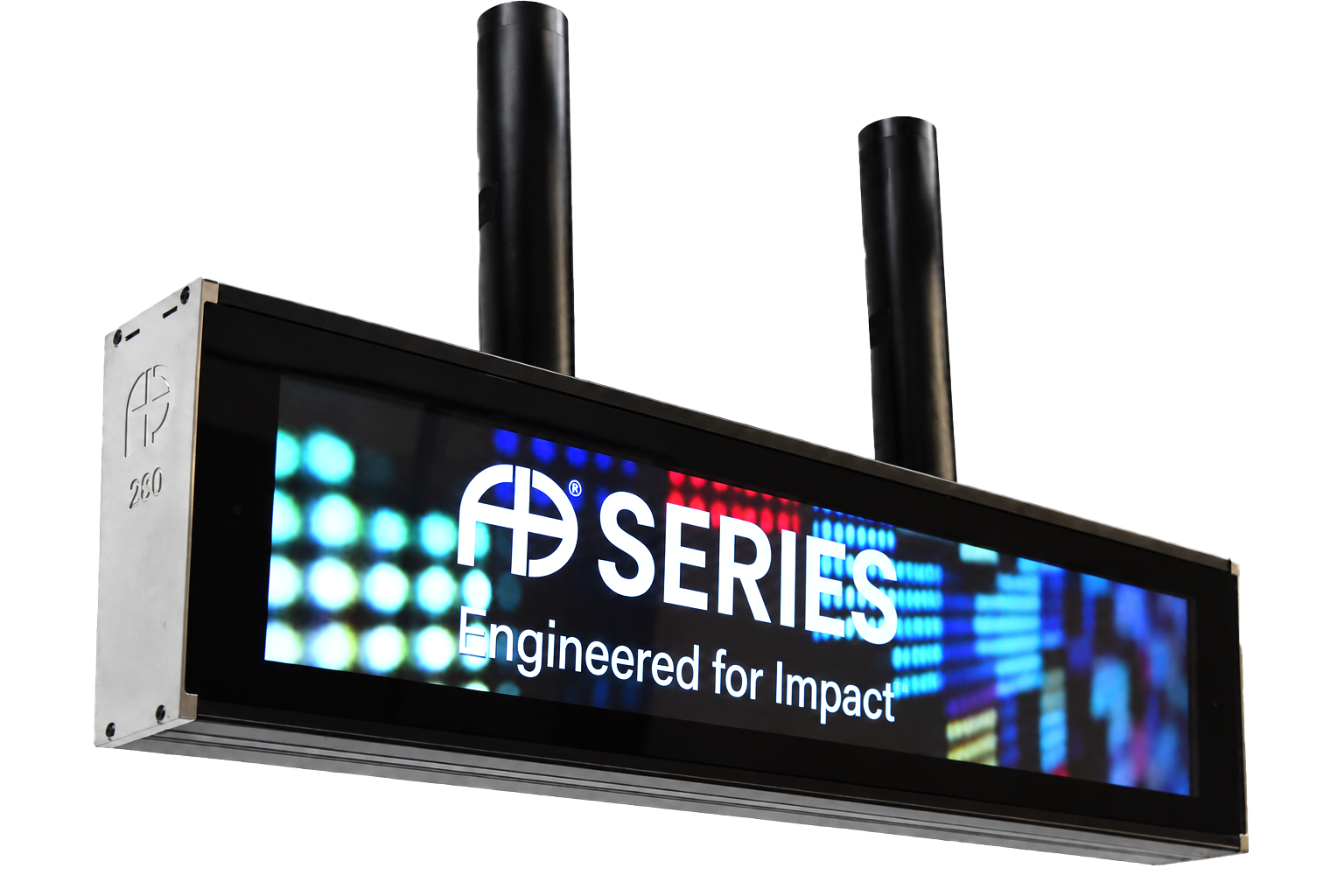
In the AD Series 28-inch passenger-display audio project, four upgraded displays were tested in a live roadside environment. That is evidence of a specific trial, not a claim of universal performance or a network-wide rollout. It illustrates why an audio brief should be checked at the intended site before the wider deployment configuration is approved.
Validate accessibility and long-term operation
The operator and integrator should establish the applicable accessibility, vehicle or local requirements and the acceptance process. Hardware options do not by themselves establish legal compliance. Include fault reporting, volume checks, weather exposure, service access and maintenance responsibilities. AD Series works with the project team to define the supported display and audio configuration while retaining the customer’s software and integration architecture.
What to include in your project brief
- Spoken message type, source, timing and priority
- Player/controller interfaces, speakers and power
- Listening area, ambient noise and operating hours
- Passenger activation and accessibility acceptance criteria
- Representative site trial, diagnostics and maintenance
Discuss the engineering behind your project
Share your application, drawings, quantity, operating environment and software requirements. Please include your company name, contact details and email so we can register the enquiry and prepare the appropriate technical information and an official quotation.
Discuss your display project